The places where the community already gathers — churches, markets, schools, barbershops.
When a community shows up together, nobody faces crisis alone.
Dignity Toolkit helps neighbors, volunteers, churches, and local organizations coordinate real support for families under pressure. Community. Mutual aid. Sanctuary.
Dignity Toolkit is the coordination layer between immigrant communities, their trusted leaders, and the support systems that are already trying to help — but working disconnected from one another.
Need help now? Find trusted resources No sign-up requiredNew here? Start here.
You don't need to be an expert to show up.
If you're new to immigration advocacy, you're in the right place. We work alongside immigrant families, volunteers, and community leaders — and we train everyone who joins us.
01
Know Your Rights — 5 min
What to do if ICE shows up. What to say — and not say. Plain English, no jargon.
Read the primer →
02
What's happening right now?
A plain-language snapshot of immigration enforcement, detention, and family separation — and how we respond.
Read the overview →
03
Glossary: terms made simple
Detention. Asylum. Parole. Removal. Deportation. What they actually mean — in everyday words.
Read the glossary →
04
First-time volunteer guide
What to expect, what to wear, what to bring, and who will be there with you. No experience needed.
Request the guide →Still have questions? Email us — we're here to help you get started.
What is Dignity Toolkit
Not another nonprofit. Not another app.
People, churches, volunteers, and organizations are already helping immigrant families across New York — but almost all of them work alone. Dignity Toolkit is the infrastructure that makes everything that already exists work together.
What it is not
What it is
A nonprofit that delivers services
A system that connects the services that already exist
An app that replaces human work
The infrastructure that makes that work more effective
A resource directory
A real-time coordination network
A program designed for communities
A system built by and with communities
A response to today's crisis
Infrastructure for long-term resilience
A system that asks about immigration status
A system that never asks
Why this exists
People do not lack compassion. They lack coordination.
Churches, volunteers, organizers, lawyers, mutual aid groups, and families are already trying to help. But most are forced to work disconnected from one another.
That fragmentation turns urgency into exhaustion, and leaves vulnerable families to navigate crisis alone. We are building the connective tissue.
Families do not know where to go.
Volunteers do not know where they are needed.
Organizations work in isolation.
Critical information is scattered, outdated, or unsafe.
The ICRN methodology
Every community already has the network. We make it visible.
When an immigrant family needs help, they don't search for an organization first. They call someone they trust. ICRN (Immigrant Community Resilience Network) is just our name for the five roles that already exist in every community — we just help them work together.
The trusted people everyone calls first when something goes wrong.
The people who connect groups that don't know each other yet — they expand the circle of care.
The people who know how to connect the community to outside resources — lawyers, clinics, food banks.
The long-standing leaders who hold memory and continuity — they make sure nothing falls apart.
Dignity Toolkit maps this invisible web, connects it, and gives it the simple protocols it needs to respond in coordination — especially in crisis. Without collecting immigration data, without imposing leaders from outside, and without creating dependency on us.
When the work is done well, Dignity Toolkit becomes unnecessary — because the community runs it.
What we have been building
From an idea to working community platforms.
Over the past year this work has grown from conversations into live, operating tools that communities are using today. Here is where things stand.
Dignidad en Accion
Our first operational platform. Immigrant families can find trusted help, and volunteers and partners can coordinate support, campaigns, and community response.
Visit dignidadenaccion.orgChildren & Family Protection
A focused deployment so no child disappears into a broken system. When a parent is detained, children can be placed in foster care — sometimes far from family, sometimes for months. This platform helps advocates and trusted partners track cases and keep families connected.
Visit children.dignitytoolkit.orgField Operations Toolkit
A practical operating model for community-led response: volunteer training levels, ethical documentation, community leadership, and printable materials.
Request the toolkitSanctuary, Shelter & Relief
Future deployments for urgent safety, shelter, mutual aid networks, and rapid emergency response, launched as communities and funding are ready.
Protection
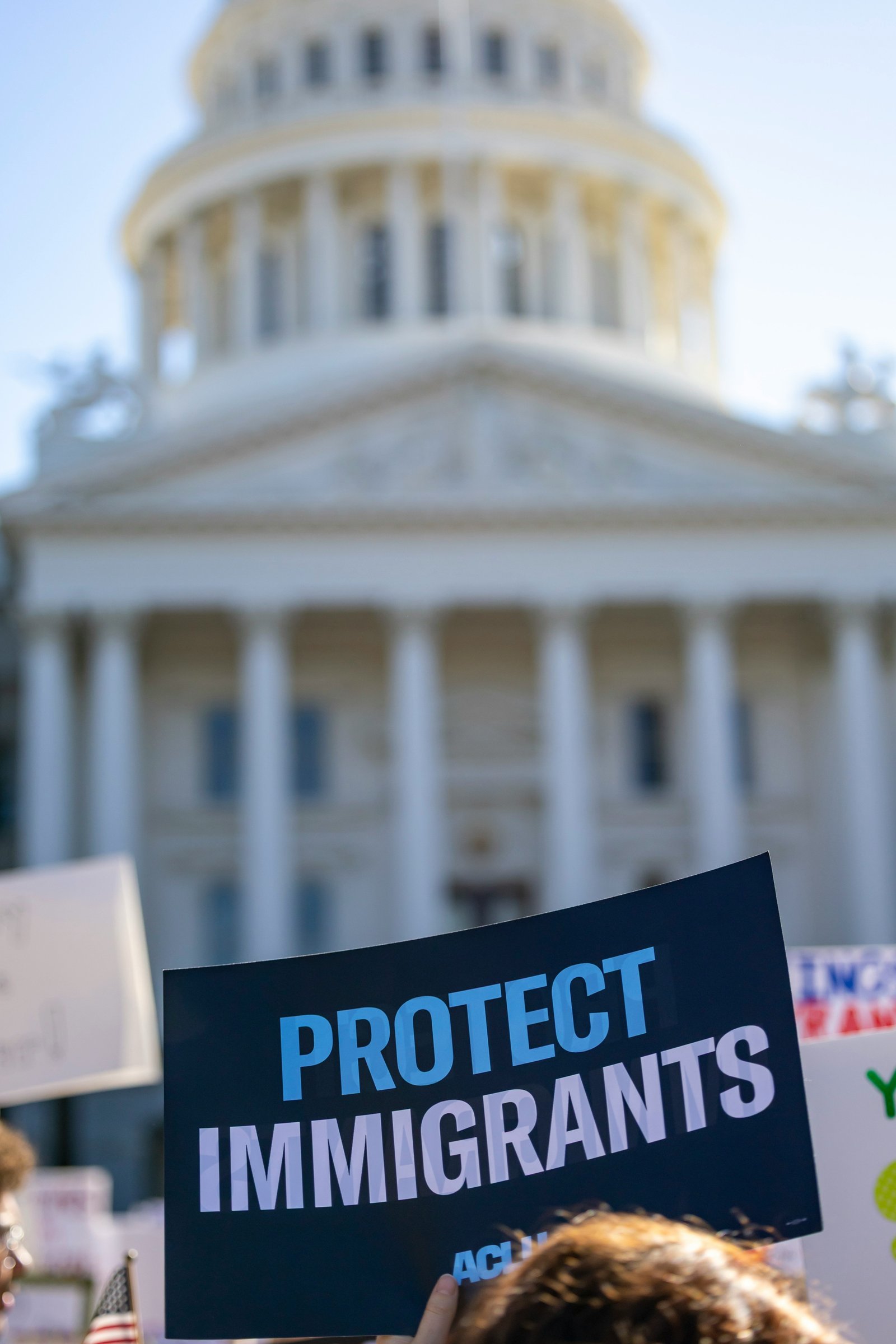
When families are under pressure, the first step should feel clear, safe, and human.
Dignity Toolkit helps immigrant communities find trusted pathways to support without having to navigate crisis alone.
Find immigrant resources
Dignity at work
Support has to reach people where pressure is real.
Community tools
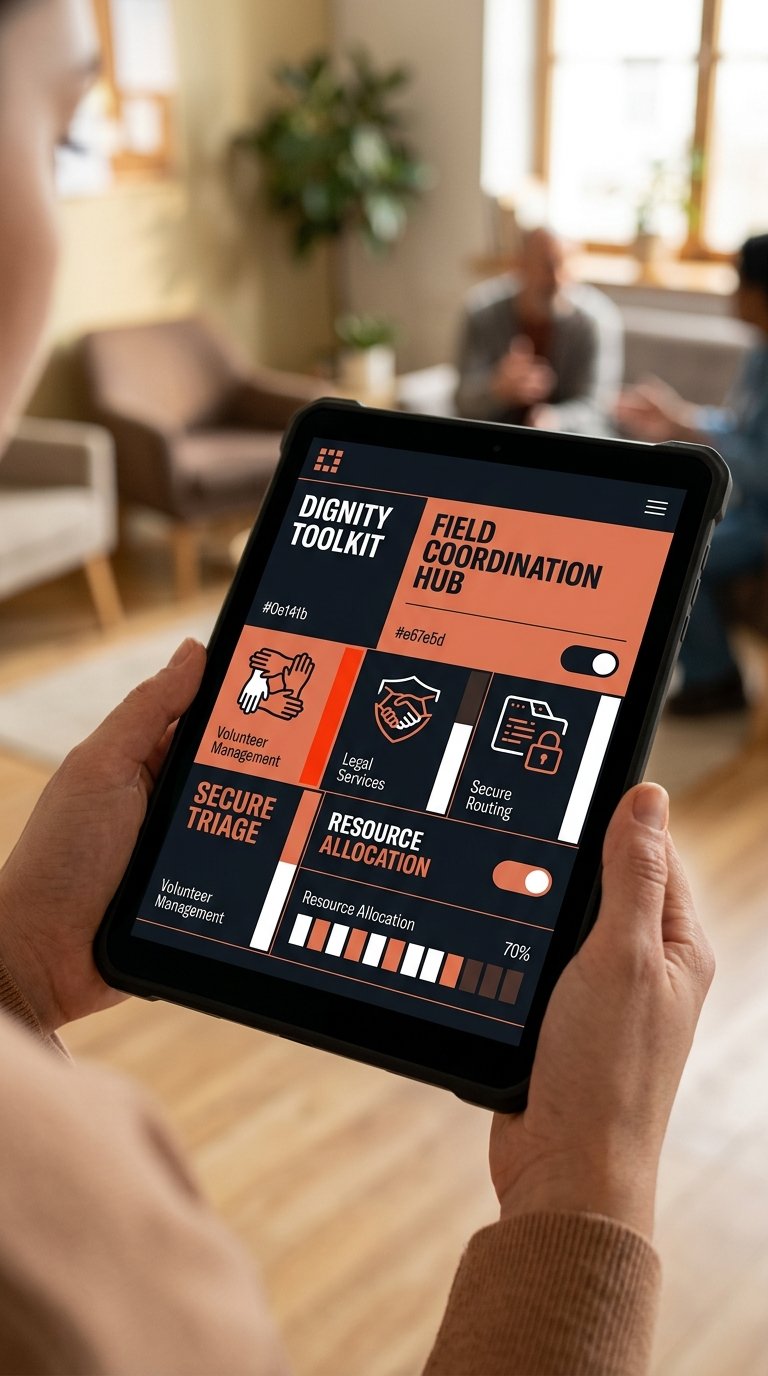
Coordination tools turn urgency into organized care.
On the ground every week
We show up at MDC — every single week.
Families with loved ones detained at the Metropolitan Detention Center (MDC) — the federal immigration detention center in Brooklyn, NY — should never have to stand there alone. Every week, families travel from across the country to visit parents, spouses, and children held inside. Our community keeps a steady presence outside MDC, week after week, so no family faces that alone.
MDC Vigil
A community vigil outside the Metropolitan Detention Center. We stand together so families — and the people detained inside — know they are not forgotten.
Legal Clinic
Free legal orientation with volunteer lawyers and advocates: case status, know-your-rights guidance, and referrals to trusted representation.
Accompaniment Tent
Volunteers welcome and accompany families visiting detained loved ones — with orientation, translation, childcare support, and a warm presence before and after each visit.
Want to join us at MDC?
Come to a vigil, volunteer at the clinic, or help staff the accompaniment tent. No experience needed — training and a team are waiting for you.
For families and neighbors
If you or someone you know needs support, start here.
You do not need an account. We do not ask about immigration status. Resources are available in English and Spanish, and are reviewed by trusted community partners.
For volunteers
Your compassion, with a clear role and real training.
Volunteers are the heart of this work. Our program gives you a place to start, training that respects your time, and a team so you never respond alone.
Level 1: Foundations
Shared basics every volunteer learns first.
- Know-your-rights basics and information verification
- Calm communication and trauma-aware care
- Privacy, consent, and community safety practices
Level 2: Specialized Support
Hands-on roles matched to your skills and availability.
- Food, clothing, translation, and childcare support
- Education help and school accompaniment
- Accompaniment for appointments and errands
Level 3: Team Leadership
For experienced volunteers ready to guide others.
- Team coordination and volunteer training
- Crisis response and supervision
- Community liaison and program support
Community Support
Markets, meals, clothing, translation, outreach, and emotional support.
Protection & Response
Verification, accompaniment, mutual aid, and safe community monitoring.
Education & Care
Childcare, school support, recreation, tutoring, and mentoring.
Advanced Roles
Administrative support, fundraising, cooperative development, and training.
Ready to join?
Tell us a little about yourself and how you would like to help. A coordinator will follow up with next steps and upcoming training dates.
For community partners
Churches, schools, and local businesses: let's build sanctuary together.
No single organization can hold a community crisis alone. Partners in our network share verified resources, coordinate volunteers, and respond together, while each keeping their own identity and mission.
Shared trusted resources
Verified, bilingual resource pathways your community can rely on and share safely.
Volunteer coordination
Training materials, role structures, and tools to organize your own volunteers.
Printable community materials
Welcome cards, rights guides, family preparation tools, and meeting guides for leaders.
A network that responds together
When urgent needs arise, connected partners can mobilize faster and safer.
Bring your organization into the network
We are onboarding trusted community partners now. Reach out and we will schedule a conversation about how we can support each other.
Sanctuary everywhere
Sanctuary is not one building. It is a whole community.
A church basement. A bodega that knows what to do. A school that protects its students. A business that opens its doors. A neighbor's kitchen table. Sanctuary is any place where a family under pressure is safe, seen, and supported.
Churches & faith communities
Open trusted space for gathering, rest, accompaniment, and rapid response.
Local businesses
Bodegas, restaurants, barbershops — safe points of information and quiet support in daily life.
Schools & universities
Protect students, support families, and connect them to trusted help without fear.
Neighbors & families
Solidarity begins at the kitchen table: checking in, showing up, and standing with each other.
Make your space part of the sanctuary network
Whatever you hold — a building, a storefront, a classroom, a living room — we will help you turn it into safety for your neighbors. Mutual aid, not charity. Solidarity, not rescue.
Support this work
Fund community care that actually reaches people.
Every contribution strengthens the systems that connect families to trusted help and turn volunteer compassion into coordinated action. This is direct impact, in motion.
$25Supports bilingual access and trusted resource systems
$50Helps train and equip community volunteers
$100Supports safe community intake and response systems
$250Helps onboard new community partners
$500+Contributes to long-term community coordination capacity
Where funding goes
A staged plan, tied to visible progress.
We fund this work in clear stages. When a stage is fulfilled, it is marked complete and the next becomes active, so support stays connected to real progress instead of vague targets.
Current Goal
$115,000
Supporting phased buildout of coordination systems, bilingual access, privacy-first architecture, and community-led expansion.
Foundation Buildout
Goal: $25,000Stabilize hosting, donation systems, bilingual access, trusted resource pathways, and communications.
Community Coordination
Goal: $25,000Onboard trusted partners, strengthen volunteer systems, and support local response pathways.
Security & Privacy
Goal: $35,000Safer forms, data minimization, access protection, secure communications, and community safety standards.
Campaign Expansion
Goal: $30,000Focused deployments for children and families, immigrant support, emergency response, and multilingual outreach.
Foundations, institutions, and major supporters: we would love to talk about long-term partnership in building community resilience infrastructure.
Nobody should disappear because the system was too fragmented to see them.
Dignity is not charity. Dignity is community — and community is sanctuary.
Trust & accountability
Privacy-first by design
No unnecessary data collection. No surveillance exposure. No immigration status required.
Registered and accountable
A registered New York nonprofit corporation with federal 501(c)(3) status in progress.
Community-led
Community leaders guide decisions, shape programs, and keep the network accountable to lived needs.